Bamboo vs Cotton Sheets: Which Is Better for Sleep in 2026?


The sheets you sleep on can influence how comfortable you feel throughout the night. Fabric affects airflow, softness, moisture control, and how warm or cool your bed feels against your skin.
Bamboo and cotton are two of the most widely used sheet materials in the bedding industry, alongside other common fabrics discussed in our guide to bed sheet materials. Cotton has long been the standard choice in homes and hotels because it is durable, familiar, and easy to maintain.
However, bamboo sheets have become increasingly popular for their smooth feel, cooling performance, and modern, eco-friendly appeal.
So, are bamboo sheets better than cotton sheets? That depends on what matters most to you. If you sleep hot, prefer a silky texture, or want stronger moisture control, bamboo may suit you better. If you want long-term durability, easier care, and a more traditional bedding feel, cotton may be the stronger option.
This guide compares bamboo vs cotton sheets in the areas that matter most for sleep: feel, breathability, moisture control, durability, maintenance, sustainability, and overall value.
Table of Contents
- 1 What Are Bamboo Sheets?
- 2 What Are Cotton Sheets?
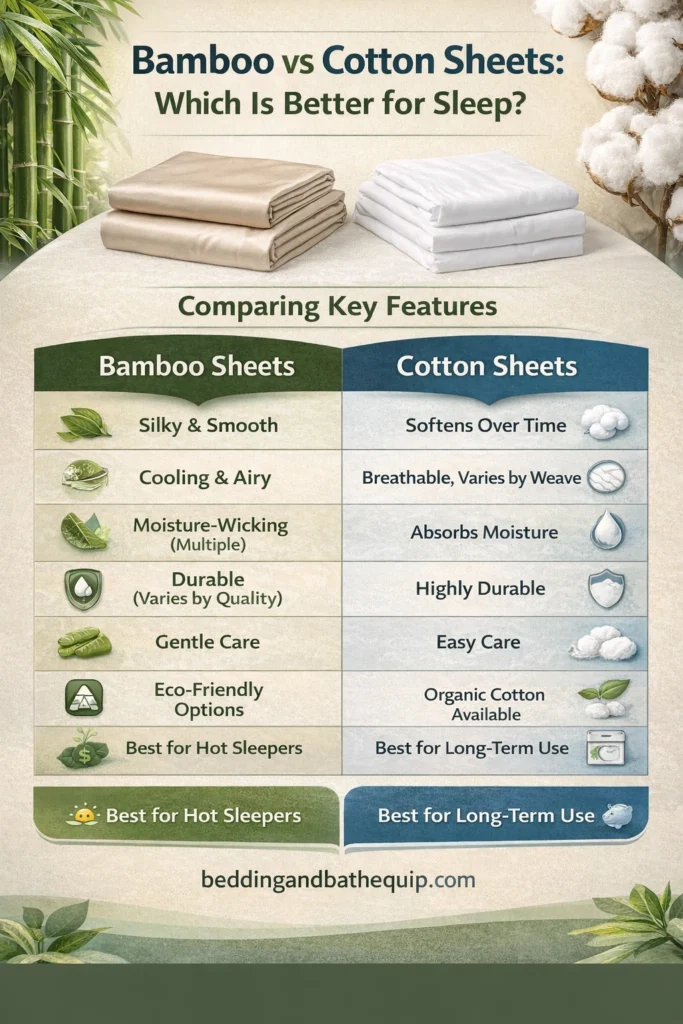
- 3 Bamboo vs Cotton Sheets: Quick Comparison
- 4 Environmental Impact: Bamboo vs Cotton
- 5 Thread Count: Does It Matter?
- 6 Bamboo vs Cotton Sheets: Which Should You Choose?
- 7 Expert Buying Tips for Choosing Quality Sheets
- 8 FAQs on Bamboo Sheets Vs Cotton Sheets
- 9 Final Verdict
What Are Bamboo Sheets?

Bamboo sheets are known for their smooth texture and cooling properties, but they are not the only alternative to traditional bedding fabrics. For example, some shoppers also compare bamboo and microfiber sheets when looking for affordable and breathable options.
Bamboo sheets are usually not made from raw bamboo fibers woven directly into fabric. Most are made by turning bamboo pulp into regenerated cellulose fibers, which are then spun into yarn and woven into sheets. That is why bamboo bedding is often labeled as bamboo viscose, bamboo rayon, or bamboo lyocell.
The three most common forms are:
- Bamboo viscose: the most widely used option in bedding
- Bamboo rayon: often used interchangeably with viscose in retail labeling
- Bamboo lyocell: a more advanced version made with a closed-loop process that recycles solvents more efficiently
This production method is what gives bamboo sheets their signature feel. They are usually smooth, soft, lightweight, and fluid against the skin. Depending on the fabric quality, they can also be highly breathable and effective at drawing moisture away from the body.
If you’re also comparing bamboo with other natural fabrics, you may want to explore our guide on bamboo vs linen sheets.
What Are Cotton Sheets?

Cotton sheets are made from fibers harvested from the cotton plant (Gossypium). They remain one of the most widely used bedding materials because they are breathable, versatile, and available in a wide range of finishes and price points.
The quality of cotton sheets depends heavily on fiber length, also called staple length. Longer fibers create finer, smoother, and stronger yarns, which usually result in softer, more durable bedding.
The most common cotton types used in sheets include:
- Egyptian cotton: known for extra-long fibers and a premium feel
- Pima cotton: another long-staple cotton valued for softness and strength
- Upland cotton: the most common variety, often used in more affordable bedding
Weave also affects how cotton sheets feel:
- Percale: crisp, cool, and breathable
- Sateen: smoother, silkier, and slightly warmer
Because cotton varies widely in fiber quality and weave, one cotton sheet set can feel very different from another.
Bamboo vs Cotton Sheets: Quick Comparison
| Feature | Bamboo Sheets | Cotton Sheets |
| Texture | Smooth, silky, drapey | Crisp or soft, depending on weave |
| Softness | Soft from the start | Often softens over time |
| Breathability | Excellent, especially for warm sleepers | Good, especially in percale |
| Moisture Control | Strong moisture-wicking performance | Absorbent but slower to dry |
| Durability | Good, but quality matters greatly | Often excellent, especially long-staple cotton |
| Care | Usually needs gentler washing | Easier to wash and dry |
| Temperature Regulation | Very good for hot sleepers | Varies by weave and weight |
| Price | Usually mid-range to premium | Available from budget to luxury |
Softness and Fabric Feel

One of the biggest differences between bamboo and cotton sheets is how they feel against your skin. Bamboo sheets are known for a smooth, almost silky finish. They tend to feel soft right out of the package, with a fluid drape that many people find luxurious.
If you like bedding that feels sleek and cool when you slide into bed, bamboo usually has the edge.
Cotton sheets feel more varied. A percale cotton sheet feels crisp and airy, while sateen feels smoother and denser. High-quality cotton can become very soft over time, but it often takes a few washes to reach that broken-in comfort.
If your main priority is immediate softness, bamboo usually wins. If you prefer a more classic hotel-sheet feel or a fabric that gets better with use, cotton may be the better choice.
Breathability and Temperature Regulation
If you sleep warm, this may be the most important section in the entire comparison.
Bamboo sheets are often chosen for their cooling performance. The fibers allow heat to escape more easily and help maintain a more balanced sleep temperature. That is why bamboo sheets are often recommended among the best sheets for hot sleepers.
Cotton can also be breathable, but performance depends heavily on weave. Percale cotton is especially good for airflow and tends to feel cool and light. Sateen cotton, while softer and smoother, usually traps more warmth.
In practical terms:
- Bamboo sheets usually offer more consistent cooling
- Percale cotton can also sleep cool
- Sateen cotton usually feels warmer
If you often wake up sweaty or overheated, bamboo sheets tend to be more comfortable than cotton.
Moisture Control
During sleep, your body naturally releases heat and moisture. Bedding that holds onto sweat can leave you uncomfortable, especially in warm weather or humid conditions.
Bamboo sheets are known for strong moisture management. They absorb sweat and move it away from the skin, allowing it to evaporate faster. This helps the bed feel drier through the night.
That makes bamboo especially appealing if you:
- sleep hot
- deal with night sweats
- live in a humid climate
Cotton also absorbs moisture well, but it tends to retain that moisture longer. In some situations, especially with heavier cotton fabrics, this can make the bed feel slightly damp compared with bamboo.
If dryness matters to you as much as softness, bamboo is usually the stronger performer.
Durability and Longevity
Durability is one of cotton’s biggest strengths.
High-quality cotton sheets, especially those made from long-staple fibers like Egyptian or Pima cotton, can last for years with proper care. Strong fibers help the fabric resist thinning, tearing, and everyday wear. That is one reason cotton remains such a trusted bedding material.
Bamboo sheets can also be durable, but their lifespan depends more heavily on manufacturing quality. Well-made bamboo lyocell sheets generally hold up better than cheaper bamboo viscose options. Lower-quality bamboo sheets may pill, thin out, or wear faster if the yarn is poor.
In general:
- Premium cotton usually lasts longer
- High-quality bamboo can still perform well
- Lower-grade bamboo is more likely to show wear sooner
If long-term durability is your top concern, cotton usually has the edge.
Maintenance and Everyday Care
Your best sheet material is not just the one that feels good. It is also the one you can care for without frustration.
Cotton sheets are usually easier to maintain. Most can handle regular machine washing, standard detergent, and moderate dryer heat. They are often the more practical choice if you want simple upkeep.
Bamboo sheets usually need a gentler routine. To preserve softness and reduce fiber damage, manufacturers often recommend:
- washing in cold or warm water
- using a mild detergent
- avoiding bleach and fabric softeners
- drying on low heat or air drying
That does not make bamboo difficult to own, but it does require more care. If you want bedding that is low-maintenance, cotton is usually the better fit.
Environmental Impact: Bamboo vs Cotton
If sustainability matters to you, the comparison gets more complex.
Bamboo Sustainability
Bamboo, as a plant, has several environmental advantages. It grows quickly, regenerates after harvesting, and generally needs less water than cotton. It also tends to require fewer pesticides.
That sounds ideal, but the full picture depends on processing. Most bamboo bedding is made of viscose or rayon, which is produced by chemical treatment of bamboo pulp to form a textile fiber. That manufacturing stage can reduce bamboo’s environmental advantage.
Bamboo lyocell is the better option if sustainability is a priority, as it is made through a more controlled, closed-loop process.
Cotton Sustainability
Cotton is natural and familiar, but conventional cotton farming can be resource-intensive. It often uses significant water and may rely heavily on pesticides and fertilizers, depending on the growing region and farming method.
Organic cotton improves that picture. It avoids synthetic pesticides and generally reflects more responsible farming practices, making it a better option than conventional cotton if you are trying to reduce environmental impact.
Which Is More Eco-Friendly?
There is no universal winner.
- Bamboo lyocell is often the better choice over standard bamboo viscose
- Organic cotton is usually a better choice than conventional cotton
- The label alone is not enough; processing and certification matter
If sustainability is important to you, look closely at how the fabric was made, not just what plant it came from.
Thread Count: Does It Matter?
Thread count is one of the most overused selling points in bedding.
It refers to the number of threads per square inch of fabric. While it can tell you something about density, it does not automatically indicate whether the sheets are high-quality.
For cotton sheets, useful ranges usually look like this:
- 200 to 300: lightweight and breathable, especially in percale
- 300 to 500: a strong range for softness and durability
- 500 to 800: smoother and denser, often in sateen
For bamboo sheets, thread count works differently. Bamboo fibers are naturally smooth, so the sheets can feel soft even at lower numbers. Many quality bamboo sheets fall around:
- 250 to 350: breathable and soft
- 300 to 500: smoother and slightly denser
What matters more than thread count is:
- fiber quality
- yarn construction
- weave
- finishing quality
A well-made 300-thread-count sheet can easily outperform a poorly made 800-thread-count one.
Bamboo vs Cotton Sheets: Which Should You Choose?
The right choice depends on how you sleep and what you expect from your bedding.
Choose Bamboo Sheets If You:
- sleep hot
- deal with night sweats
- want a smooth, silky feel
- prefer stronger moisture-wicking performance
- care more about cooling than maximum durability
Choose Cotton Sheets If You:
- prefer crisp or classic bedding
- want long-lasting sheets
- value easy washing and drying
- want more options across different budgets
- like the choice between percale and sateen feels
Neither material is automatically better for everyone. The better sheet is the one that fits your body temperature, comfort preference, and care habits.
Expert Buying Tips for Choosing Quality Sheets
When shopping for sheets, it is easy to get distracted by marketing terms. A smarter approach is to focus on the details that actually affect comfort and performance.
Use these guidelines:
- Prioritize fiber quality over thread count: long-staple cotton and well-made bamboo fabrics usually matter more than inflated numbers
- Check certifications: OEKO-TEX® and GOTS can help you verify safety and material standards
- Understand weave differences: percale feels cooler and crisper; sateen feels smoother and warmer
- Read the composition carefully: know whether you are buying bamboo viscose, bamboo lyocell, organic cotton, or a blend
- Be cautious with vague luxury claims: softness, durability, and breathability come from construction quality, not just branding
The more clearly a product explains its materials and production, the easier it is to trust.
FAQs on Bamboo Sheets Vs Cotton Sheets
Are bamboo sheets cooler than cotton?
Yes, bamboo sheets are usually cooler than most cotton sheets because the fabric is breathable and naturally moisture-wicking. This helps regulate body temperature and keeps sleepers dry during the night.
Do bamboo sheets last as long as cotton sheets?
Bamboo sheets can last for several years with proper care. However, premium cotton sheets usually last longer because cotton fibers are naturally stronger.
Are bamboo sheets softer than cotton sheets?
Bamboo sheets typically feel softer than standard cotton sheets because the fibers create a smooth, silky texture. However, high-quality cotton sheets, such as Egyptian or Pima cotton, can also become very soft over time.
Do bamboo sheets shrink more than cotton sheets?
Bamboo sheets can shrink if washed in hot water or dried on high heat. Washing in cold water and drying on low heat helps preserve the fabric and prevent shrinkage.
Are bamboo sheets more durable than cotton?
High-quality cotton sheets are generally more durable than bamboo sheets. Long-staple cotton fibers create a stronger fabric that withstands frequent washing better.
Final Verdict
Both bamboo and cotton sheets can give you a comfortable night’s sleep, but they excel in different ways. Before you decide between bamboo vs cotton sheets, consider your personal sleep preferences.
- Bamboo sheets stand out for softness, cooling, and moisture control.
- If you sleep warm or want bedding that feels smooth from the first night, bamboo is often the better choice.
- Cotton sheets stand out for durability, versatility, and easier care.
- If you want classic comfort, strong long-term value, and a wider range of options, cotton is hard to beat.
- If your priority is cooling and softness, bamboo usually comes out ahead.
- If your priority is durability and classic comfort, cotton is usually the better fit.
The best choice comes down to how you sleep, how much maintenance you want, and whether sustainability matters to you.