Ultimate Guide to Bed Sheet Materials: Types, Pros, Cons, and How to Choose the Best Fabric

A good mattress often gets the credit for a comfortable night’s sleep, but bedding plays an equally important role. Among all bedding components, bed sheet materials have the greatest impact on comfort, breathability, and long-term durability.
Many people shop for sheets solely on color or thread count. Yet the fabric itself, cotton, linen, bamboo, silk, or microfiber, determines how sheets feel, how long they last, and how well they regulate temperature while you sleep.
Understanding the types of bed sheets available today helps prevent common buying mistakes. Some fabrics stay cool throughout the night, while others trap warmth and are better suited for colder environments. Some materials soften over time, while others retain their original texture for years.
This guide breaks down everything you need to know about bed sheet materials, including:
- The difference between natural and synthetic bedding fabrics
- How weave and fiber type affect comfort
- The pros and cons of popular sheet materials
- Fabrics that work best for hot sleepers, sensitive skin, or durability
By the end, you’ll understand how to choose the best material for bed sheets based on your sleep habits, climate, and budget.
Table of Contents
- 1 Why Bed Sheet Material Matters for Sleep Quality
- 2 Understanding the Basics of Bed Sheet Fabrics
- 3 Complete Breakdown of Bed Sheet Materials
- 4 Bed Sheet Weaves Explained
- 5 How to Choose the Best Bed Sheet Material
- 6 Bed Sheet Material Comparison Table
- 7 Common Myths About Bed Sheet Materials
- 8 Frequently Asked Questions About Bed Sheet Materials
- 9 Final Thoughts: Choosing the Right Bed Sheet Material
Why Bed Sheet Material Matters for Sleep Quality
The fabric used in your sheets does more than determine how soft your bed feels. It influences temperature regulation, skin comfort, breathability, and overall sleep quality.
Research from the Sleep Foundation shows that maintaining a comfortable sleep temperature is one of the most important factors for uninterrupted sleep. Bedding materials play a major role in achieving this balance because they control airflow, moisture absorption, and heat retention.
Comfort and Skin Feel
Different bedding fabrics create completely different sleeping experiences.
For example:
- Cotton sheets tend to feel soft and breathable
- Linen sheets feel slightly textured but extremely airy
- Silk sheets feel smooth and cool against the skin
- Microfiber sheets feel soft but are less breathable
Because sheets remain in direct contact with your skin for hours each night, choosing the right material can significantly improve comfort.
Temperature Regulation
Some fabrics naturally allow better airflow than others.
Breathable materials include:
- Cotton
- Linen
- Bamboo-derived fabrics
These are often recommended as cooling bedding materials for hot sleepers.
Meanwhile, fabrics like microfiber or polyester tend to trap more heat, making them better suited for cooler climates or winter use.
Durability and Long-Term Value
High-quality bedding fabrics can last for many years when properly cared for.
For example:
- Linen sheets are known for exceptional durability and can last decades.
- High-quality cotton sheets become softer with repeated washing.
- Synthetic sheets often resist wrinkles but may wear out faster.
Understanding how bed sheet materials work helps you balance price, longevity, and comfort before purchasing.
Avoiding Common Buying Mistakes
Many shoppers assume a higher thread count automatically means better sheets. In reality, fiber quality and weave structure matter far more than thread count alone.
For instance:
- A 400-thread-count cotton sheet made with long-staple cotton can outperform a 1000-thread-count sheet made with lower-quality fibers.
Learning the basics of bedding fabrics and sheet construction ensures you choose sheets that actually improve your sleep rather than just look good on the packaging.
Understanding the Basics of Bed Sheet Fabrics
Before comparing specific materials like cotton, linen, or bamboo, it helps to understand how bed sheet fabrics are categorized and constructed. Three key factors determine the comfort, durability, and breathability of a sheet:
- Fiber type
- Weave style
- Thread count and yarn quality
All these factors shape how sheets feel, how well they regulate temperature, and how long they last.
Understanding these basics makes it much easier to choose from the wide range of bed sheet materials available today.
Natural vs Synthetic Bed Sheet Materials
Most bedding fabrics fall into two main categories: natural fibers and synthetic or semi-synthetic fibers.
Natural Bedding Materials
Natural fibers come directly from plants or animals. These materials are often valued for their breathability, softness, and moisture regulation.
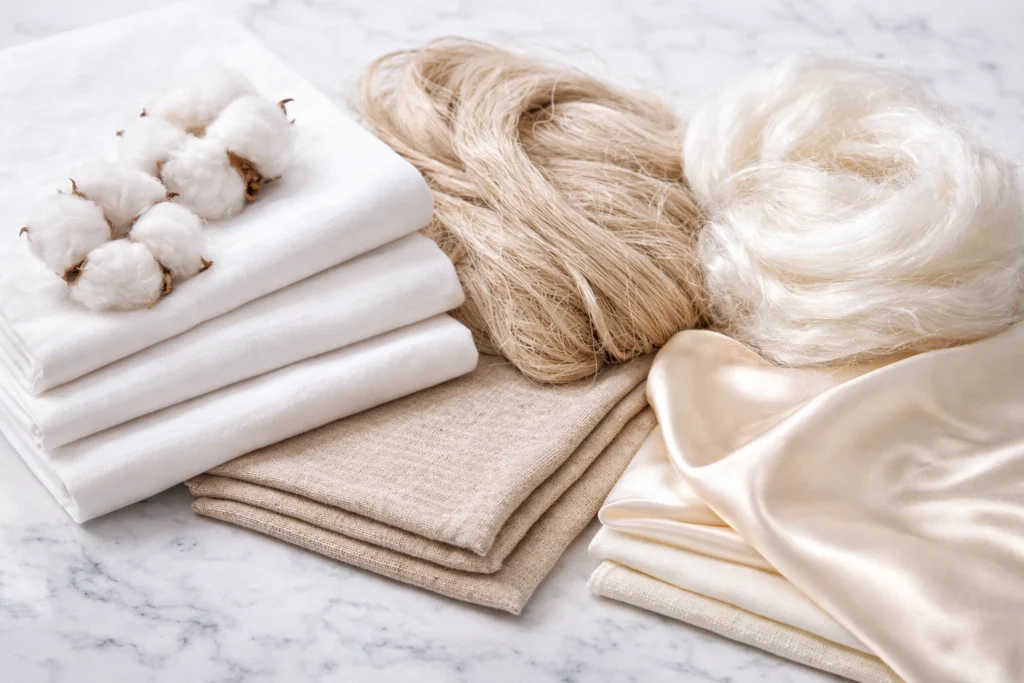
Common natural bed sheet materials include:
- Cotton: the most widely used bedding fabric worldwide
- Linen: made from flax fibers and known for durability
- Silk: a luxury fiber produced by silkworms
- Bamboo-derived fabrics: typically processed into rayon or viscose
Many people prefer natural fabrics because they allow airflow and regulate temperature, thereby improving sleep comfort.
For example:
- Cotton and linen sheets tend to feel cooler in warm climates.
- Silk naturally regulates body temperature and reduces friction on skin and hair.
Because of these qualities, many sleepers consider natural bedding materials the best fabric for bed sheets, particularly in warmer environments.
Synthetic and Semi-Synthetic Sheets
Synthetic bedding materials are engineered using petroleum-based or chemically processed fibers. These fabrics are often designed to improve durability or reduce cost.
Common synthetic or semi-synthetic sheet fabrics include:
- Microfiber: ultra-fine polyester fibers
- Polyester blends: often used for wrinkle resistance
- Rayon or Lyocell (Tencel): regenerated fibers made from wood pulp
Some of the advantages of these materials include:
- Lower price points
- Resistance to wrinkles and shrinking
- Easy maintenance
However, synthetic fabrics may be less breathable than natural bedding materials, leading to heat retention for some sleepers.
How Fabric Construction Affects Bed Sheets
Beyond fiber type, the way a sheet is constructed also affects its overall quality. However, three elements matter most.
Fiber Type
Fiber length and quality significantly influence how sheets feel and perform.
For example:
- Long-staple cotton fibers produce softer and stronger sheets.
- Short fibers may create rougher fabrics and cause them to wear out faster.
This is why premium cotton varieties such as Egyptian cotton and Pima cotton are widely used in high-quality bedding.
Weave Style
The weave pattern determines a sheet’s texture and airflow. Two of the most common weave styles are:
- Percale weave: a tight, one-over-one weave that creates crisp and breathable sheets
- Sateen weave: a smoother weave that produces a silkier surface with slightly more warmth
Weave type plays a major role in determining whether sheets feel cool and lightweight or smooth and cozy.
Thread Count vs Fabric Quality
Thread count is often marketed as the ultimate measure of sheet quality, but it can be misleading. Thread count simply refers to the number of threads woven into one square inch of fabric.
While moderate thread counts can indicate good construction, fiber quality and weave style are far more important.
For example:
- A 300–400 thread count sheet made from high-quality cotton may feel better and last longer than a poorly made sheet advertised as 1000 thread count.
Because of this, many bedding experts recommend focusing on material type, weave, and fiber quality instead of thread count alone.
Complete Breakdown of Bed Sheet Materials
Understanding the most common types of bed sheets helps you choose the best fabric for comfort, durability, and climate. Each bedding material has distinct characteristics that affect breathability, softness, maintenance, and price.
Some fabrics are naturally cooling and breathable, while others are designed to be wrinkle-resistant or more affordable. Below is a detailed look at the most widely used bed sheet materials, along with their pros, cons, and ideal uses.
Cotton Sheets
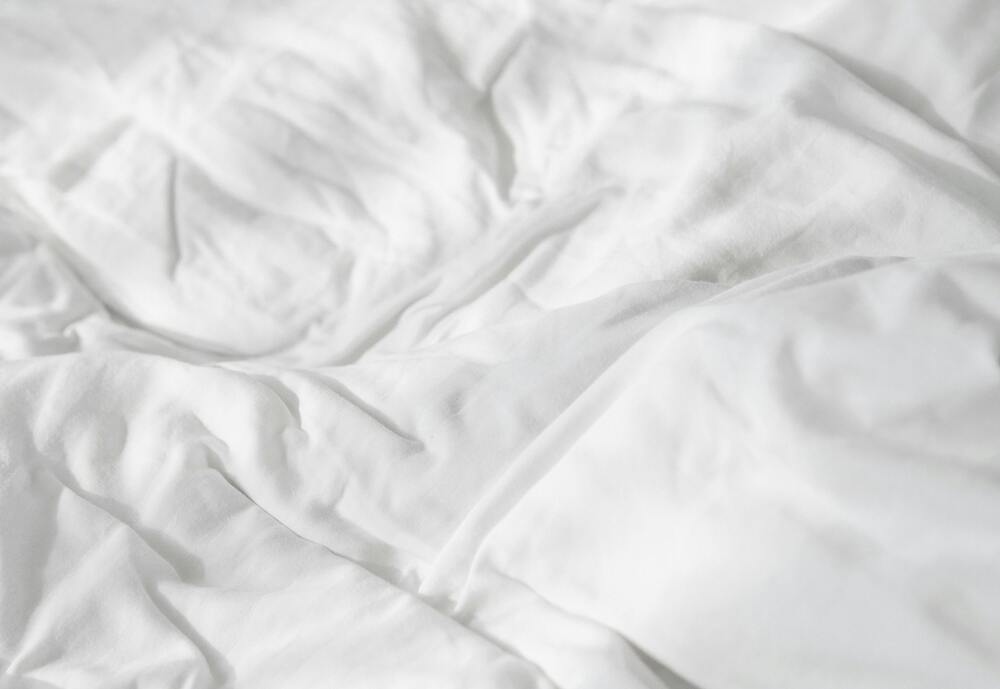
Cotton is the most popular bed sheet material worldwide. It offers an excellent balance of comfort, breathability, and durability, which is why most bedding brands use cotton as their primary fabric.
Cotton is widely used in bedding because it allows airflow and absorbs moisture efficiently, and helps regulate sleep temperature.
Cotton sheets are made from fibers harvested from the cotton plant. These fibers are spun into yarn and woven into fabric.
High-quality cotton sheets are known for:
- Softness
- Breathability
- Long lifespan
- Natural moisture absorption
Over time, cotton sheets often become softer with repeated washing, which is one reason they remain a favorite among sleepers.
Types of Cotton Used in Bed Sheets
Not all cotton sheets are the same. The quality depends largely on fiber length, also known as staple length.
Egyptian Cotton
Egyptian cotton is known for its extra-long staple fibers, which yield exceptionally smooth, durable fabrics.
Characteristics include:
- Luxuriously soft texture
- Strong, durable fibers
- Excellent breathability
Because of its quality, Egyptian cotton is often used in premium bedding products.
Pima Cotton
Pima cotton is another high-quality cotton variety grown primarily in the United States. A well-known trademarked version is Supima cotton, which is produced under strict quality standards.
Benefits include:
- Long-lasting durability
- Soft, smooth feel
- Reduced pilling compared to lower-grade cotton
Upland Cotton
Upland cotton is the most common type used in everyday bedding.
While it is more affordable, it generally has shorter fibers, which can result in a slightly rougher fabric than luxury cotton varieties.
Pros of Cotton Sheets
Cotton remains a top choice for bedding because it offers several advantages.
Key benefits include:
- Breathable fabric that helps regulate body temperature
- Durable construction that withstands repeated washing
- Softness that improves over time
- Wide availability at different price points
These qualities make cotton sheets suitable for everyday use and a wide range of climates.
Cons of Cotton Sheets
Despite their popularity, cotton sheets also have a few drawbacks.
Possible downsides include:
- Wrinkling after washing
- Premium varieties can be expensive
- Lower-quality cotton may pill over time
Who are Cotton Sheets Best For?
Cotton sheets are ideal for:
- Most sleepers
- Warm or moderate climates
- People who prefer breathable bedding
For many households, cotton remains the best material for bed sheets due to its balance of comfort and durability.
Linen Sheets
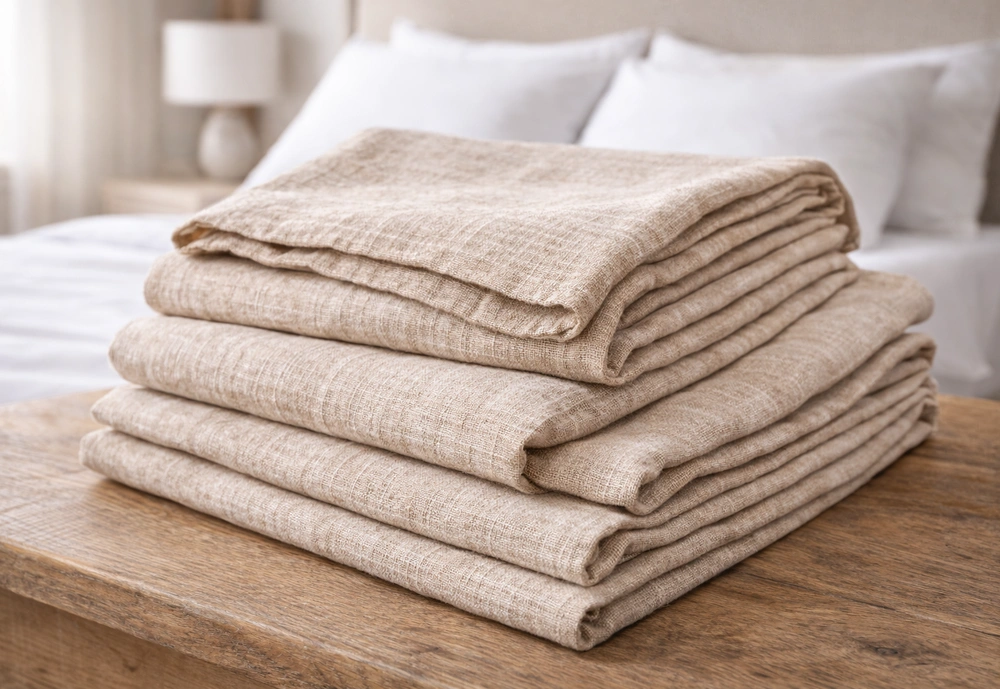
Linen sheets are made from flax fibers, one of the oldest textile materials in the world. Linen bedding has been used for thousands of years and remains popular for its exceptional breathability and durability.
Unlike cotton, linen fibers are thicker and stronger, resulting in a distinctive texture and a long lifespan.
These sheets are known for their:
- Natural texture
- Breathability
- Ability to regulate temperature
Because linen fibers allow significant airflow, linen bedding is often recommended as cooling sheets for hot sleepers.
Key Characteristics
Linen sheets have several distinctive qualities. They are often described as:
- Slightly textured rather than silky smooth
- Highly breathable
- Moisture-wicking
- Extremely durable
Over time, linen becomes softer while maintaining its strength, making it one of the longest-lasting bedding fabrics available.
Pros of Linen Sheets
Key advantages include:
- Exceptional temperature regulation
- High durability and long lifespan
- Natural moisture absorption
- Increasing softness over time
Because linen breathes so well, it is often used in summer bedding and warm climates.
Cons of Linen Sheets
However, linen also comes with a few trade-offs. Potential drawbacks include:
- Higher price compared to cotton
- A rougher texture initially
- Wrinkling more easily
Some sleepers love the relaxed, natural look of linen, while others prefer smoother fabrics.
Who are Linen Sheets Best For?
Linen sheets are best suited for:
- Hot sleepers
- Warm climates
- People looking for durable bedding that lasts many years
Bamboo Sheets
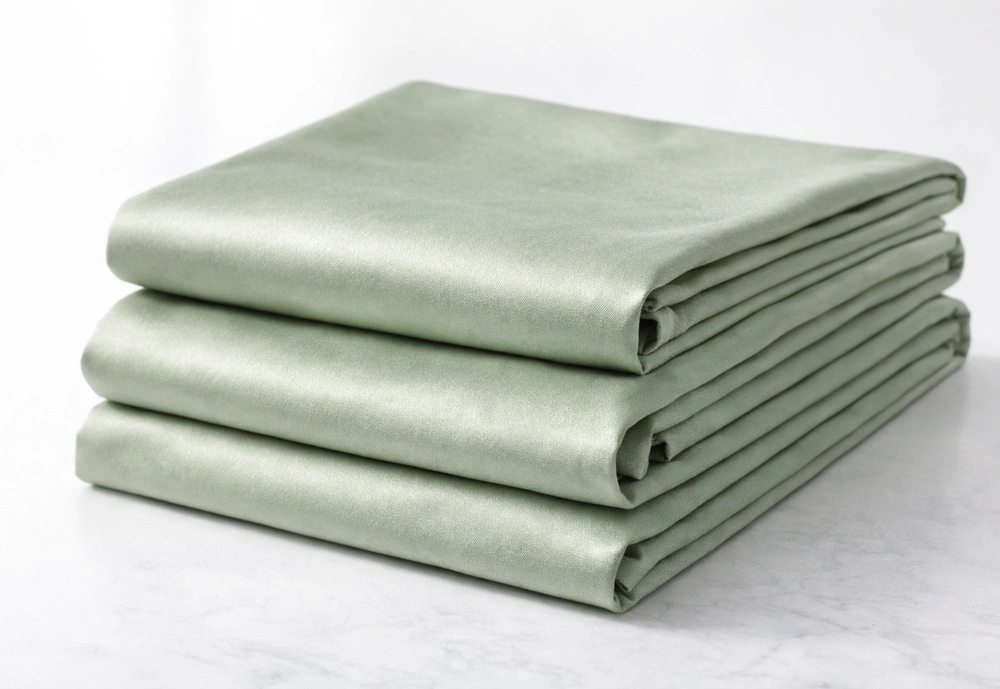
Bamboo sheets have become increasingly popular over the past decade due to their soft texture and moisture-wicking properties.
Most bamboo sheets are actually made from bamboo-derived rayon or viscose, where bamboo pulp is processed into fibers and spun into fabric.
Bamboo bedding fabrics are typically produced by converting bamboo plant fibers into regenerated cellulose fibers.
Common labels include:
- Bamboo rayon
- Bamboo viscose
- Bamboo lyocell
These fabrics are valued for their smooth feel and breathable structure.
Key Characteristics
Bamboo sheets often feel:
- Silky and smooth
- Lightweight
- Moisture-wicking
- Breathable
Because of their softness, bamboo sheets are often compared to high-quality cotton sheets.
Pros of Bamboo Sheets
Advantages include:
- Soft texture
- Good airflow and breathability
- Moisture regulation
- Naturally resistant to odors
These features make bamboo sheets particularly appealing to hot sleepers and people with sensitive skin.
Cons of Bamboo Sheets
However, bamboo fabrics are not without criticism. Some potential downsides include:
- Chemical processing is required for viscose production
- Durability varies between brands
- Higher cost compared to basic cotton sheets
Because manufacturing methods vary, the quality of bamboo sheets can differ significantly between manufacturers.
Who Are Bamboo Sheets Best For?
Bamboo sheets are commonly recommended for:
- Hot sleepers
- People with sensitive skin
- Those who prefer silky-feeling bedding
Silk Sheets
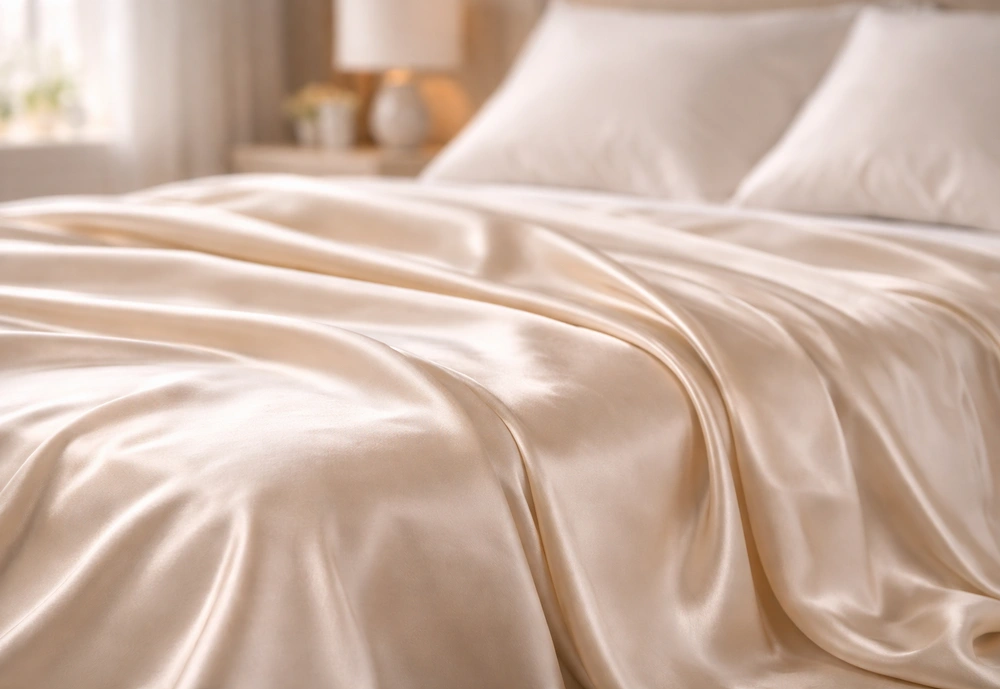
Silk sheets represent the luxury end of the bedding market. Silk is a natural protein fiber produced by silkworms, known for its extremely smooth texture and elegant appearance.
Because silk fibers are naturally temperature-regulating, silk bedding can feel cool in warm weather and slightly warm in cooler conditions.
These fibers are carefully woven into fabric known for its softness and shine. High-quality silk sheets are often made from mulberry silk, considered the finest silk variety.
Pros of Silk Sheets
Silk bedding offers several unique benefits.
These include:
- Exceptionally smooth surface
- Natural temperature regulation
- Hypoallergenic properties
- Reduced friction on skin and hair
Because of the reduced friction, silk bedding is sometimes recommended for people with sensitive skin or hair concerns.
Cons of Silk Sheets
Despite their luxurious feel, silk sheets have limitations. Common drawbacks include:
- High cost
- Delicate fibers require careful washing
- Lower durability compared to cotton or linen
For these reasons, silk sheets are often considered luxury bedding rather than everyday bedding.
Who Are Silk Sheets Best For?
Silk sheets are best suited for:
- Luxury bedding enthusiasts
- Sensitive skin
- People seeking ultra-smooth bedding fabrics
Microfiber Sheets

Microfiber sheets are made from ultra-fine synthetic fibers, usually polyester. Because these fibers are extremely thin, microfiber fabrics can feel surprisingly soft despite being synthetic.
Microfiber sheets are widely used because they are affordable, durable, and wrinkle-resistant.
Pros of Microfiber Sheets
Microfiber sheets offer several practical advantages. These include:
- Lower price compared to natural fabrics
- Wrinkle resistance
- Lightweight construction
- Durability
Because microfiber sheets resist wrinkles and shrinking, they are often chosen for easy-care bedding.
Cons of Microfiber Sheets
However, microfiber sheets may not be ideal for everyone. Potential drawbacks include:
- Reduced breathability compared to cotton or linen
- Heat retention
- Synthetic feel
For people who sleep hot, microfiber sheets may feel less comfortable than natural bedding materials.
Who Are Microfiber Sheets Best For?
Microfiber sheets work well for:
- Budget-friendly bedding
- Guest rooms
- Cold climates where warmth is preferred
Tencel or Lyocell Sheets
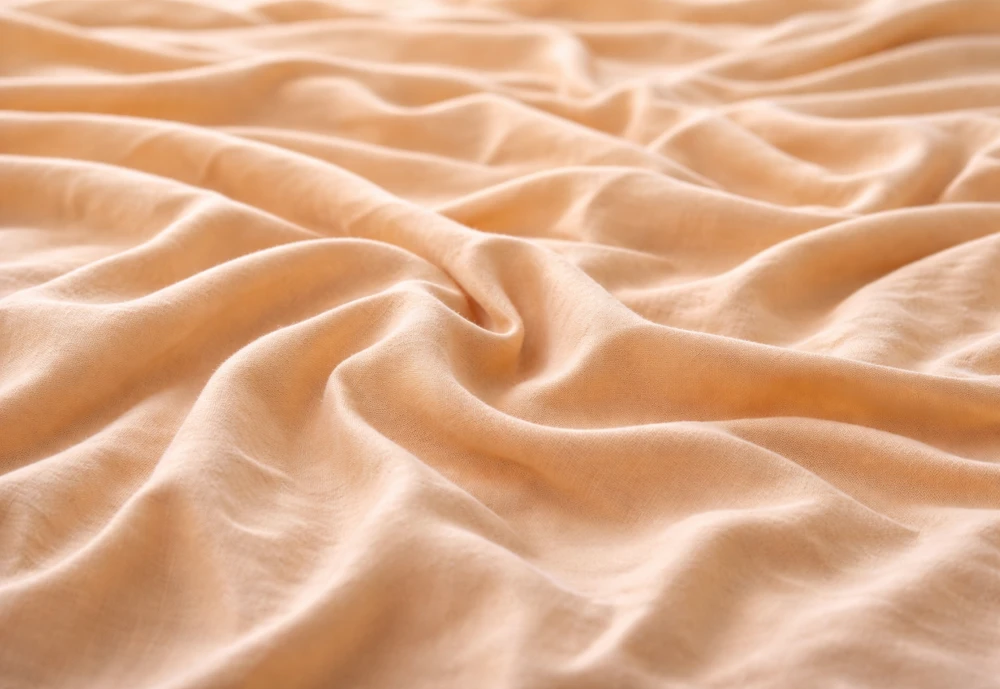
Tencel, also known as lyocell, is a semi-synthetic fiber made from wood pulp, usually sourced from eucalyptus trees. It has gained popularity for combining softness, breathability, and environmentally conscious production methods.
Tencel fibers are created through a process that converts plant cellulose into a smooth textile fiber. Unlike some other regenerated fabrics, lyocell production uses a closed-loop system, meaning most solvents are reused during manufacturing.
Characteristics
Tencel sheets are known for:
- Smooth surface texture
- Excellent moisture absorption
- Lightweight feel
- Breathability
Because of their cooling properties, Tencel sheets are often marketed as cooling bedding materials.
Who Are Tencel Sheets Best For?
Tencel sheets are commonly chosen by:
- Sustainability-focused buyers
- Hot sleepers
- People seeking soft, breathable sheets
Bed Sheet Weaves Explained
When comparing different bed sheet materials, many people focus only on the fabric itself. However, the weave pattern used to construct the fabric also plays a major role in how sheets feel and perform.
Even if two sheets are made from the same fiber, such as cotton, they can feel completely different depending on how the threads are woven together.
The weave determines several important characteristics, including:
- Texture and softness
- Breathability and airflow
- Durability and resistance to wear
- Overall appearance of the fabric
Understanding sheet weave types helps you choose bedding that matches your comfort preferences and sleeping environment.
Percale Weave
Percale is one of the most popular cotton bed sheet weaves. It is known for its crisp texture and excellent breathability.
Percale uses a simple one-over-one-under weave pattern, which means each thread crosses over and under another thread evenly. This structure creates a tightly woven fabric that feels lightweight and airy.
Key characteristics of percale sheets include:
- Crisp and cool feel
- Matte finish rather than shine
- Excellent airflow
- Lightweight structure
Because percale allows good air circulation, it is often recommended for people who sleep hot or live in warm climates.
Many hotel sheets use percale weaves because they produce that clean, crisp feeling often associated with luxury bedding.
Percale sheets typically perform best with a thread count of 200 to 400, allowing the weave to remain breathable while maintaining durability.
Best for:
- Hot sleepers
- Warm climates
- People who prefer crisp bedding
Sateen Weave
Sateen is another common weave used in high-quality bed sheets. Unlike percale, sateen uses a different weaving structure that prioritizes smoothness and softness.
In a sateen weave, several threads float over a single thread below. This creates a fabric surface that feels silky and smooth.
Key characteristics of sateen sheets include:
- Soft and smooth texture
- Slight sheen or luster
- Heavier feel than percale
- Slightly warmer sleeping surface
Because sateen sheets trap slightly more heat than percale, they are often preferred in cooler climates or by sleepers who prefer a warmer bed.
The floating thread structure also makes sateen sheets feel softer right away, though this weave may be slightly more prone to pilling over time, depending on the fiber quality.
Best for:
- Cold sleepers
- People who prefer smooth bedding
- Bedrooms with cooler temperatures
Percale vs Sateen: Which Is Better?
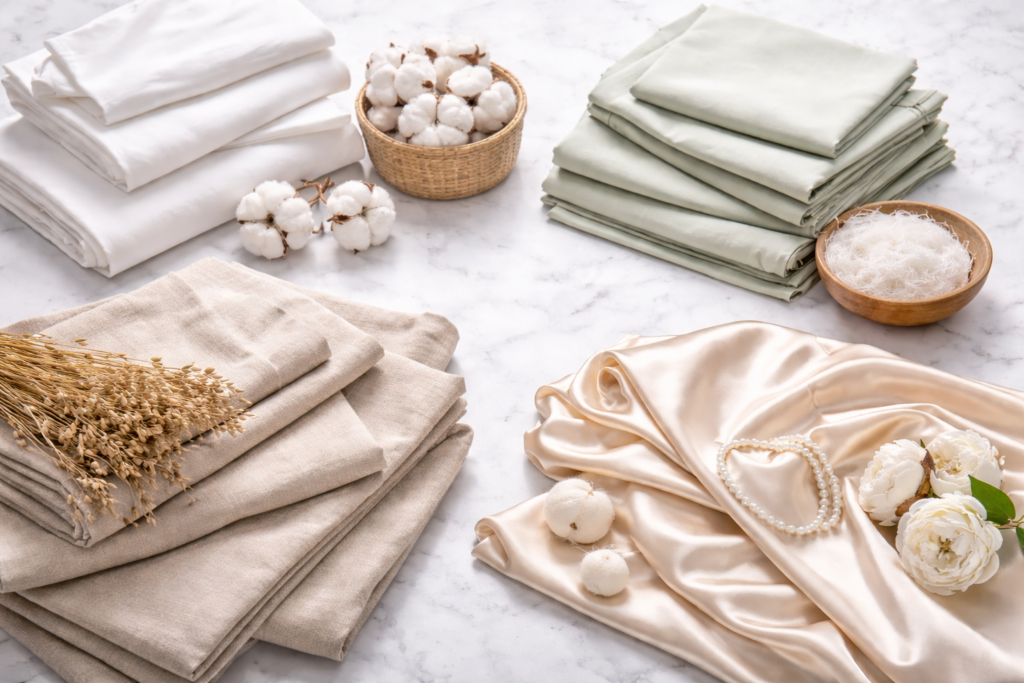
The choice between percale vs sateen sheets ultimately depends on personal comfort preferences.
Percale sheets tend to feel:
- Crisp
- Cool
- Lightweight
Sateen sheets tend to feel:
- Smooth
- Slightly warmer
- Heavier and silkier
Neither weave is inherently better than the other. Instead, each suits different sleeping styles.
If you want breathable sheets that stay cool through the night, percale is often the better choice. If you prefer bedding that feels smooth and cozy, sateen may be more comfortable.
When choosing between these weaves, the fiber quality and material type still matter more than the weave alone. For example, a high-quality cotton percale sheet will usually outperform a low-quality sateen sheet.
How to Choose the Best Bed Sheet Material
With so many types of bed sheets available today, choosing the right one can feel overwhelming. The best material for bed sheets depends on several factors, including your sleep temperature, skin sensitivity, climate, and how long you want your sheets to last.
Instead of focusing solely on price or thread count, consider how different bedding fabrics perform in real sleeping conditions. Some materials stay cooler, others feel softer, and some last much longer than others.
Below are practical recommendations to help you choose the best bed sheet material based on common sleep preferences.
Best Bed Sheet Materials for Hot Sleepers
If you tend to wake up feeling warm or sweaty during the night, breathability should be your top priority. Cooling sheets allow air to circulate and help wick moisture away from your body.
Materials that work well for hot sleepers include:
- Cotton (especially percale weave)
- Linen
- Bamboo-derived fabrics
- Tencel / Lyocell
These fabrics allow better airflow and prevent heat from building up under the covers.
Linen is particularly effective because flax fibers create tiny gaps in the fabric that allow heat to escape. Bamboo and Tencel fabrics also regulate moisture effectively, helping keep the bed dry and comfortable.
Best Bed Sheet Materials for Cold Sleepers
People who feel cold at night often benefit from sheets that retain warmth and feel cozy against the skin.
Warmer sheet materials include:
- Sateen cotton
- Microfiber
- Flannel
- Silk
Sateen sheets have a tighter weave that traps slightly more heat than percale. Microfiber sheets also retain warmth because synthetic fibers allow less airflow.
Flannel sheets are another common choice for colder seasons because the brushed fabric surface holds warmth effectively.
Best Sheets for Sensitive Skin
For people with sensitive skin or allergies, smooth and natural fabrics tend to be the most comfortable.
Recommended materials include:
- Bamboo fabrics
- Silk sheets
- Organic cotton
Silk and bamboo fabrics produce less friction against the skin, which can help reduce irritation. Organic cotton sheets may also be preferable because they are produced without certain pesticides or harsh finishing chemicals.
According to the National Institutes of Health, fabrics that minimize irritation and friction can help protect sensitive skin and improve sleep comfort.
Best Bed Sheet Materials for Durability
If longevity is your main concern, certain fabrics consistently outperform others. Highly durable sheet materials include:
- Linen
- Long-staple cotton (Egyptian or Pima cotton)
- High-quality cotton blends
Linen sheets are especially known for their durability. With proper care, linen bedding can last 10 to 20 years or longer, making it one of the most durable bedding fabrics available.
High-quality cotton sheets also perform well over time, especially when made from long-staple fibers that resist pilling and tearing.
Factors to Consider Before Buying Bed Sheet Materials
When sourcing for different bed sheet materials, keep the following factors in mind:
- Climate: If you live in a warm region, breathable fabrics such as cotton or linen are often the best choice.
- Sleeping temperature: Hot sleepers typically benefit from lightweight fabrics that promote airflow.
- Maintenance: Some fabrics require more care than others. For example, silk sheets often require delicate washing, while microfiber sheets are easier to maintain.
- Budget: Natural fibers like cotton and linen may cost more initially, but often last longer than cheaper synthetic alternatives.
By considering these factors, you can select bedding that improves sleep comfort while offering good long-term value.
Bed Sheet Material Comparison Table
After exploring the most common bed sheet materials, it becomes easier to compare how each fabric performs across the factors that matter most to sleepers: breathability, durability, price, and ideal use.
The table below summarizes the key differences among the most widely used bedding fabrics, helping you quickly identify which material best suits your needs.
| Material | Breathability | Durability | Price | Best For |
| Cotton | High – allows airflow and absorbs moisture well | High (especially long-staple cotton like Egyptian or Pima) | $$ | Everyday comfort, balanced softness, most climates |
| Linen | Very high – excellent airflow and cooling | Very high – one of the longest-lasting bedding fabrics | $$$ | Hot sleepers, warm climates, and durability |
| Bamboo (Rayon/Viscose) | High – moisture-wicking and breathable | Medium to high, depending on manufacturing quality | $$–$$$ | Sensitive skin, silky feel, temperature regulation |
| Silk | Moderate to high – naturally temperature regulating | Medium – delicate fibers require careful care | $$$$ | Luxury bedding, smooth texture, skin, and hair care |
| Microfiber | Low to moderate – synthetic fibers trap heat | Medium | $ | Budget bedding, guest rooms, colder climates |
| Tencel or Lyocell | High – excellent moisture control and airflow | Medium to high | $$–$$$ | Eco-conscious buyers, hot sleepers, smooth cooling sheets |
What This Comparison Means for Buyers
Looking at these materials side by side highlights a few important patterns in bedding fabric performance.
Breathability tends to be highest in natural fibers such as linen and cotton. These fabrics promote better air circulation and moisture evaporation, helping regulate body temperature throughout the night.
Durability varies significantly between materials. Linen and long-staple cotton sheets are widely recognized for their longevity, while delicate fabrics like silk require more careful handling.
Price differences are also influenced by fiber quality and production complexity. Luxury fabrics such as silk and premium cotton typically command higher prices, while synthetic fabrics like microfiber remain the most affordable option.
For most sleepers, cotton continues to offer the best balance of breathability, durability, and affordability, which explains why it remains the most widely used bed sheet material globally.
Common Myths About Bed Sheet Materials
When shopping for bedding, it’s easy to encounter marketing claims that sound convincing but don’t always reflect how sheets actually perform. Over the years, several misconceptions about bed sheet materials have become widespread, often leading buyers to focus on the wrong factors.
Understanding these myths can help you make better decisions when choosing the best material for bed sheets.
Myth 1: Higher Thread Count Means Better Sheets
One of the most common beliefs in the bedding industry is that a higher thread count automatically means better quality sheets. While thread count can provide some insight into how a fabric is constructed, it does not always reflect a sheet’s overall quality.
Thread count simply refers to the number of threads woven into one square inch of fabric.
In reality, several factors influence sheet quality more than thread count, including:
- Fiber length and quality
- Fabric weave (percale vs sateen)
- Manufacturing standards
For example, sheets made from long-staple cotton fibers, such as Egyptian or Pima cotton, tend to be softer and more durable, even at moderate thread counts of 300-500.
Some manufacturers inflate thread count numbers by twisting multiple yarns together and counting them separately, which can make sheets appear higher quality than they actually are.
According to Consumer Reports’ research and product testing, thread count alone does not determine sheet quality. Fiber quality, weave structure, and manufacturing standards are often more important indicators of performance than raw materials.
Myth 2: Bamboo Sheets Are Always Eco-Friendly
Bamboo bedding is often marketed as a sustainable alternative to traditional fabrics, but the reality is more nuanced.
While bamboo plants grow quickly and require less water than cotton, most bamboo sheets are not made from raw bamboo fibers. Instead, they are produced through a process that converts bamboo pulp into viscose or rayon fibers using chemical treatments.
This manufacturing process can involve solvents and chemicals that, if not handled responsibly, can reduce its environmental benefits.
However, some bamboo fabrics produced using the lyocell process use a closed-loop system that recycles solvents, reducing environmental impact.
This means bamboo bedding can still be environmentally responsible, but it largely depends on the manufacturing method and brand transparency. You can always report false advertising claims at ReportFraud.ftc.gov.
Myth 3: Expensive Sheets Always Last Longer
Price alone does not guarantee better bedding. While premium sheets often use higher-quality fibers, durability depends more on the type of material and fabric construction.
For example:
- Linen sheets are known for exceptional longevity and can last many years.
- Long-staple cotton sheets also offer strong durability when properly cared for.
- Silk sheets, though expensive, tend to be more delicate and may wear out faster with frequent use.
A well-made cotton sheet with a moderate thread count can often outlast a more expensive sheet made from weaker fibers.
Because of this, the most reliable way to evaluate bedding is to focus on:
- Fabric type
- Fiber quality
- Weave construction
- Brand manufacturing standards
By looking beyond marketing claims, you can choose bed sheet materials that provide real comfort, durability, and value.
Frequently Asked Questions About Bed Sheet Materials
What is the best material for bed sheets?
Cotton is the most widely recommended material because it offers a balance of breathability, durability, and comfort. Linen is also excellent for cooling, while bamboo fabrics are often chosen for their smooth feel.
Are bamboo sheets better than cotton?
Not necessarily. Bamboo sheets are usually softer and more silky, while cotton sheets, especially long-staple cotton, tend to be more durable and structured. Most bamboo sheets are actually rayon or viscose made from bamboo pulp.
What thread count is best for bed sheets?
Most quality sheets fall between 200 and 600 thread count, depending on the material and weave. Fiber quality and weave type are more important indicators of sheet quality than extremely high thread counts.
Which bed sheets stay the coolest?
Sheets made from breathable fabrics such as linen, cotton percale, bamboo-derived fabrics, and Tencel (lyocell) tend to stay coolest because they allow airflow and wick moisture.
How long should bed sheets last?
Most cotton sheets last 3–5 years, while linen sheets can last 10 years or longer with proper care. Durability depends on fiber quality, washing frequency, and fabric construction.
Final Thoughts: Choosing the Right Bed Sheet Material
Choosing the right bed sheet material depends on your comfort preference, climate, durability, and budget. Cotton remains the most balanced option because it is breathable, durable, and widely available. Linen offers the best airflow and long lifespan, making it suitable for hot climates.
Bamboo and Tencel provide smooth textures and good moisture control. Silk offers luxury and reduced skin friction but requires careful maintenance. Microfiber is the most affordable option, but it retains more heat.
For most sleepers:
- Choose cotton or linen for breathability
- Choose bamboo or Tencel for smooth, cooling fabrics
- Choose linen or long-staple cotton for durability
- Choose microfiber for budget bedding