How to Get Rid of Black Spots on Bathroom Ceiling—Fast and Easy

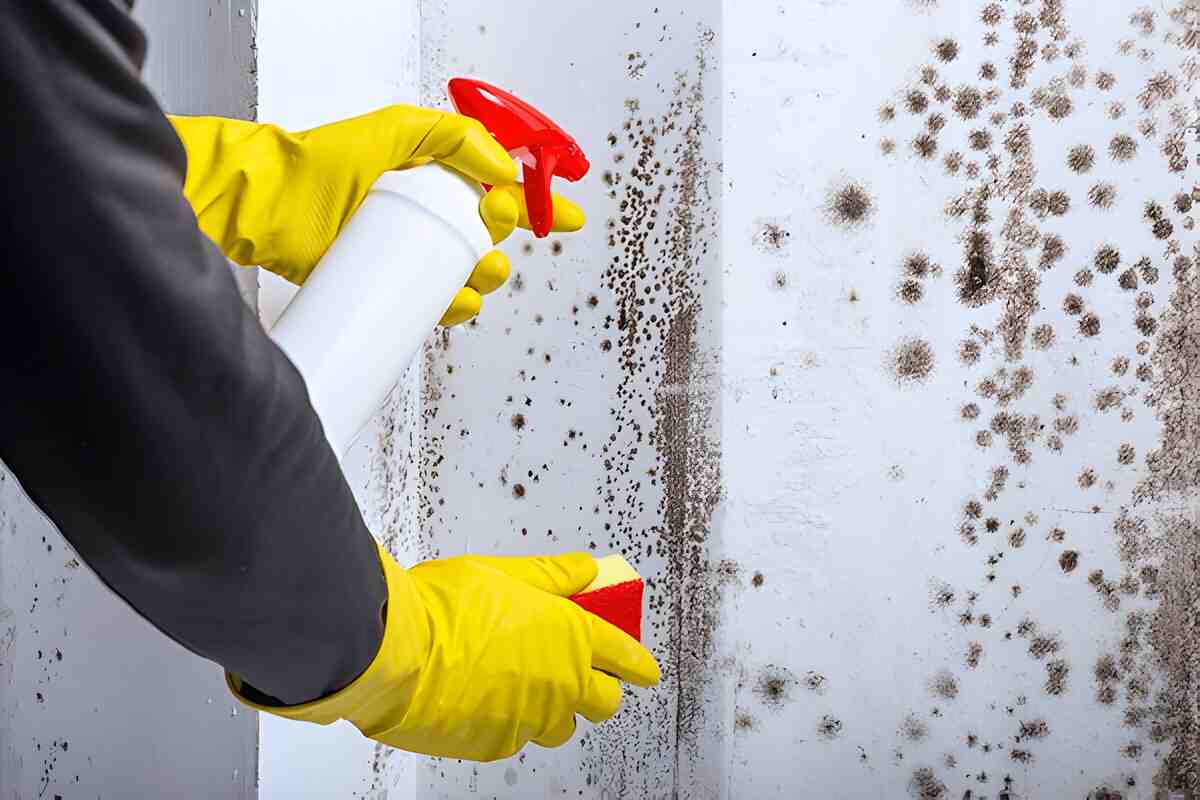
Black spots on bathroom ceilings are a common occurrence, especially in winter. They look like dark green or black patches that can spread and grow larger over time.
These are black molds; they stick longer than necessary and can be an eye sore. In addition, they can cause microbial growth and may subsequently lead to lung diseases.
In this article, I’ll explain why you have these black spots on your bathroom ceiling and tiles. I will also share a step-by-step guide on how to eliminate it effectively.
Table of Contents
- 1 Why Are There Black Spots On My Bathroom Ceiling?
- 2 Is Black Mold In The Bathroom Ceiling A Health Hazard?
- 3 How To Get Rid Of Black Spots On Your Bathroom Ceiling
- 4 How to Clean Mold From a Bathroom Ceiling Using Reagents
- 5 How To Prevent Mold Growth In Your Bathroom Walls And Ceilings
- 6 Frequently Asked Questions on Black Spots on Bathroom Ceiling
Why Are There Black Spots On My Bathroom Ceiling?

Moisture remains an ideal breeding ground for mold. Molds on the bathroom ceilings occur due to excessive moisture, water damage, lack of proper ventilation, etc.
Below, I have listed some of the factors that cause black spots to appear on your bathroom ceiling.
Lack of ventilation
Black spots can arise when your bathroom has excessive moisture or steam. These moistures result from the steam from a warm or hot water shower. They rise and evaporate into the ceiling.
However, if your bathroom is not properly ventilated, the moisture will cause mold spores to grow on the bathroom ceiling. As a result, black dots or mold exist in your bathroom unhindered.
Therefore, poor ventilation is a significant factor in the occurrence of black spots or mold growth.
Roof leaks
Roof leaks may seem trivial, but they may also be why your bathroom walls and tiles look dirty. This often happens when you have a leaking pipe. It drips water onto the ceiling, which attracts mold quickly and causes black spots on the affected area.
High humidity levels
When the air in your bathroom is humid, that means there’s a lot of moisture in the air. High humidity levels cause water to condense on the ceilings and walls, leading to black spots. With a closed bathroom window, there is no means of airflow to the environment.
Mold or mildew growth
Mold growing in your bathroom is like those tiny plants you don’t want in your garden. They show up as black spots because of too much moisture.
If left unchecked, they make your bathroom look dirty and so unkempt.
Is Black Mold In The Bathroom Ceiling A Health Hazard?
Yes, black mold in the bathroom ceiling is a health hazard as it has different health risks. Breathing in mold spores can trigger allergies, respiratory problems, and other health issues.
Research carried out by the Centers for Disease and Prevention has proven that molds can cause the following health issues:
- Skin irritation
- Lung infections
- Throat irritation
- Eye discomfort
- Wheezing cough
- Stuffy nose
However, lung infections often occur among individuals with weak immune systems.
Here are some other reasons you should not allow black molds to accumulate in your bathroom ceiling:
- It can damage the ceiling: Mold can eat away at the surface it’s growing on. It weakens the structure over time.
- It looks unpleasant: Black mold causes dirt on the affected area and messes with the paint on the wall.
- It can spread: If not adequately addressed, molds can spread to other house areas.
How To Get Rid Of Black Spots On Your Bathroom Ceiling
You only need a few supplies and a little effort to eliminate these black spots on your bathroom ceiling. If you notice any black spots on your bathroom ceiling.
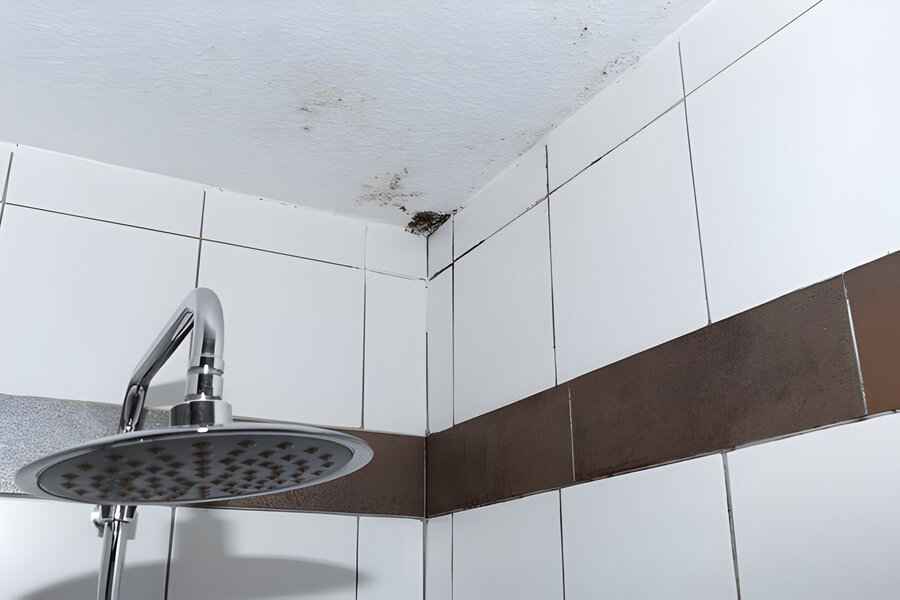
Follow this step-by-step guide to eradicate and clean the mold from the bathroom ceiling effectively:
Step 1: Look out for spots
The first step is to locate the black mold. It is usually easy to locate a mold on the bathroom ceiling, even from a distance. However, there are other indicators of mold, like the damp smell or discoloration and nasal stuffiness.
If you have a popcorn ceiling, the molds will likely stay around for long unless you replace the affected bathroom ceiling area.
Step 2: Get the necessary tools.
Once you have located the affected area, get a footstool to help you quickly reach the ceiling. Most of the time, a ladder is preferable, especially if you have tall ceilings.
Wear gloves to keep your hands safe from the cleaning agents. Also, wear eye protection to prevent exposing your eyes to splashbacks and fumes.
Step 3: Remove mold with bleach, vinegar, or borax
These reagents have been proven effective in eradicating molds on bathroom ceilings. They are also easy to use and more convenient than any other cleaning method.
How to Clean Mold From a Bathroom Ceiling Using Reagents
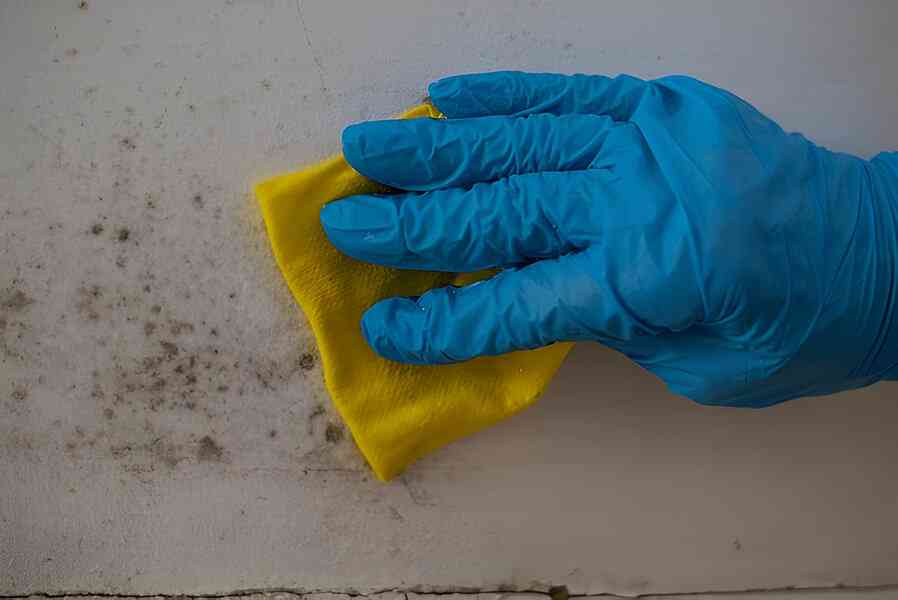
Before you clean black mold from the ceiling with any of the below methods, scrub and wash the affected area thoroughly. After that, use a dishwasher detergent or mold cleaner to wash off the area.
Below are ways to use the different reagents to clean mold:
Bleach
- Dilute the bleach by mixing 1c (240ml) of bleach for every 1 US gallon (3.8 liters of water)
- Apply the bleach solution using a sponge or cloth on the moldy areas on the walls, making sure to cover all the affected areas.
- Scrub the area with a scrub brush or sponge to remove the mold.
- Wipe the walls with clean water to remove the bleach solution.
- Dry with a towel or let the walls air dry entirely.
White Vinegar
- Mix equal parts of white vinegar and water in a spray bottle.
- Spray this solution generously on the moldy areas, ensuring you cover every affected part of the ceiling.
- Allow the white vinegar solution to sit on the mold for an hour to kill and loosen the mold effectively.
- Gently scrub the area using a brush or sponge, allowing the mold to come off quickly.
- Next, use a damp cloth to wipe away the vinegar and mold residue from the ceiling.
- Open the windows or use a fan to help dry the area and improve ventilation in the bathroom.
Borax
- Prepare the borax solution by mixing one cup of borax with one gallon of water in a clean bucket.
- Apply the solution thoroughly to the moldy areas in the bathroom.
- Next, scrub till the mildew starts to pew off.
- Allow the borax solution to sit on the bathroom ceiling for a while to penetrate and kill the mold.
- Rinse out and wipe with a dry towel.
How To Prevent Mold Growth In Your Bathroom Walls And Ceilings
Mold exists in the bathrooms because of poor ventilation. Ensure the bathroom is properly ventilated to prevent these black dots from appearing on your bathroom wall, ceiling, or shower.
As much as these cleaning agents can effectively remove mold, they are not permanent solutions. Once removed, you need to get to the root of the problem.
To do this, restrict the medium they appear on the surface of your ceiling. That way, they don’t get to grow back after they have been removed. After a shower, clean the moisture on the bath walls. Open up your bathroom window to allow moisture to escape.
Below, I have detailed some of the things to do to prevent mold from growing again:
Hang your wet towels outside

Wet towels can cause your bathroom to appear humid. Instead, hang these towels to dry outside the bathroom. Or better still, keep them in laundry rooms altogether, as this prevents mold growth.
Get a dehumidifier
During winter, you get to experience molds due to the humidity of the atmosphere. To combat this, use a dehumidifier to avoid warm and damp conditions. They filter out humidity, reducing the chances of mold occurrence in your home.
Fix water or roof leaks.
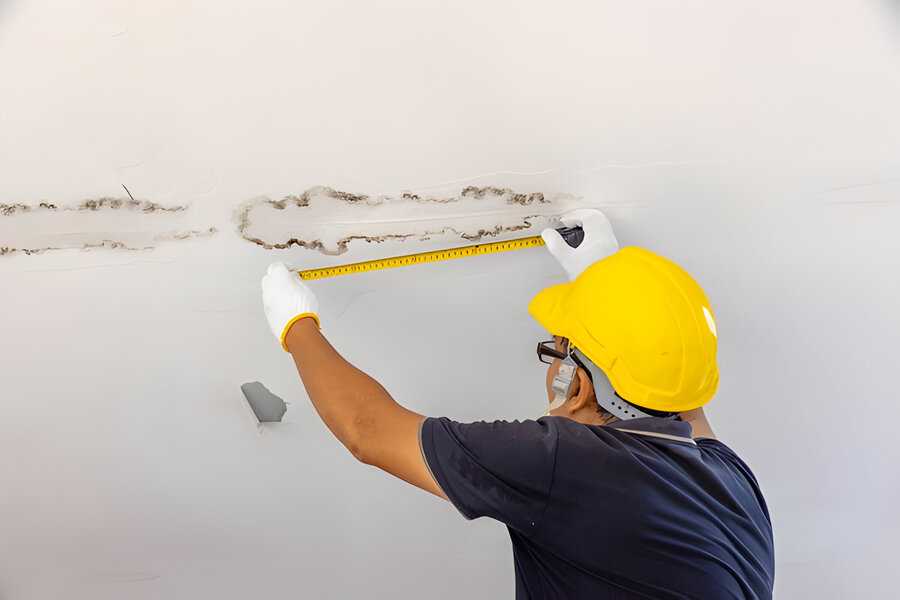
The common occurrence of bathroom ceiling molds results from water-leaking roofs. If you have a leaking bathroom roof, identify the specific location of the holes and fix it.
You can hire a professional to fix them if you’re not handy with tools. Keep in mind that when these holes are not correctly fixed, the spores will eventually grow back even after cleaning them with vinegar.
Allow sunlight to penetrate
If you are always in the habit of shutting your bathroom door and window, then it’s time you change that habit. Exposing your bathroom to sunlight makes it difficult for mold to breed. After bathing, open the windows for some hours to remove heat.
Use an exhaust fan to ventilate the room.
You might have to get an exhaust fan if you want your bathroom ceilings to be constantly mold-free. Good exhaust fans enable proper ventilation without sunlight and help dry water faster.
Frequently Asked Questions on Black Spots on Bathroom Ceiling
What causes black spots on a bathroom ceiling?
Black spots on a bathroom ceiling are typically caused by mold growth and moisture remains. This is because of the high humidity levels and poor ventilation in the bathroom.
What do mold spores on the bathroom ceiling look like?
Mold spores on a bathroom ceiling appear as black or dark green patches that can spread over time.
Is it safe to clean black mold yourself?
Yes, it is safe to clean black mold yourself as long as you take proper safety precautions. This includes wearing rubber gloves and a mask to protect yourself from fungus.
Can I paint over a black mold on your bathroom ceiling?
No, it is not recommended to paint over a black mold. After painting the walls, the mold will continue to grow underneath the paint. It is better to address the mold issue adequately before painting.
What kills black mold on the bathroom ceiling?
You can use a water and bleach solution or a commercial mold remover to kill black mold on the bathroom ceiling.